Mixing saltwater looks like the easiest job in the hobby. Tip salt into water, stir until it disappears, pour it in. Do it that way and you will spend the following morning wiping white crust off the glass and trying to work out why your corals have closed up. Good saltwater is made in a set order, at a set strength, with a little patience built in. The process below works whether you are preparing twenty litres for a weekend water change or filling a new tank from scratch.
Start With the Right Water
Tap water is the most common cause of problems in a marine tank that otherwise looks well run. It arrives carrying nitrate, phosphate, chlorine or chloramine, and often traces of copper and silicate. In a reef tank those traces feed algae and interfere with coral growth, and untreated chlorine will damage your biological filter.
Use reverse osmosis water, ideally with a deionisation stage as well. A cheap TDS meter tells you what you are starting with, and the goal out of a good RO/DI unit is a reading of 0 ppm. A plain RO unit that leaves two or three ppm is workable for a fish-only system, but replace the filters before using it on a reef.
If you do not run your own unit, most shops sell RO water by the container. Take your own clean, food-grade containers, check the TDS before you pay, and use the water within a few days. Do not substitute bottled mineral water or filtered tap water — both add minerals you cannot easily remove.
Pick a Salt and Stick to It
Salt mixes are not all the same. Reef mixes are blended to hold calcium, alkalinity and magnesium at the levels corals need. Fish-only mixes are cheaper and leaner. Whichever you choose, read the bucket and mix to the strength it recommends, then buy the same brand again when it runs out. Constant switching makes it impossible to tell whether a parameter has shifted because of your tank or your salt.
Weigh the salt rather than scooping it. Kitchen scales that read to the gram give you the same batch every time; a heaped cup does not. As a rough guide, 35 grams of salt per litre of water lands close to natural seawater strength, but mixes vary and you should always confirm with a salinity test before use.
Keep one container for mixing and nothing else. A 25-litre food-grade barrel with a lid is ideal. Never use a bucket that has held cleaning products, paint or garden chemicals — plastic holds onto residues.
Measure Salinity With Something You Trust
Salinity is the number that matters most, and it is the one most often measured badly.
A refractometer is the usual choice. It needs calibrating — follow the maker's instructions and use a proper reference solution rather than assuming it is correct out of the box. A floating glass hydrometer is accurate enough if you correct for temperature. A plastic swing-arm hydrometer is the least reliable of the three and is best treated as a rough guide.
For a reef tank, aim for a specific gravity of around 1.025 at 25 °C, which is close to 35 ppt. Fish-only systems are sometimes run slightly lower. Whatever figure you choose, keep it steady; swinging between 1.022 and 1.028 week to week stresses livestock more than sitting at one slightly unusual value.
Two practical points. Test at tank temperature, because readings drift with heat. And wait until the salt has fully dissolved before you trust a reading — undissolved crystals give a falsely high result, and you will end up diluting a batch that was already correct.
Temperature, Aeration and Mixing Time
A heater and a small powerhead in the mixing barrel do most of the work. Set the heater to your tank temperature — 25 °C is a common target for a reef — and let the powerhead keep the water moving so the salt dissolves rather than settling in a lump on the bottom.
Give it time. An hour of circulation gets the salt into solution; twelve to twenty-four hours of gentle aeration gets the water to a stable pH and oxygen level. Newly mixed saltwater is not ready the moment it turns clear. It can sit at a higher pH than your tank and hold elements that will settle out later.
Leave the lid loose or off during mixing so gases can escape, then cover the barrel once the batch is ready to stop dust and evaporation pushing the salinity up. Use it within a few days.
Mixing a Batch: Step by Step
- Fill your container with RO/DI water to the mark and check the TDS.
- Add the heater and powerhead and bring the water to tank temperature.
- Weigh the salt. Start slightly under the amount you expect to need.
- Add the salt to the water slowly, with the powerhead running. Never pour water onto a pile of salt.
- Let it circulate for at least an hour, then test salinity.
- Adjust in small amounts — a few grams at a time — and re-test once each addition has dissolved.
- Aerate for twelve to twenty-four hours.
- Check temperature and salinity again immediately before use.
Safety and Water Changes
Saltwater and electricity are a poor combination, and a water change is when you are most likely to slop one into the other.
- Fit an RCD (residual current device) to any socket serving the tank.
- Unplug heaters, pumps and lights before putting your hands in the water or moving equipment.
- Never add salt directly to the tank, sump or filter. It will land on livestock and burn it.
- Match temperature and salinity before the change, and keep changes to roughly 10–20 per cent of the volume at a time.
- Add water gently with a siphon or jug rather than tipping a bucket over the rockwork.
- Keep saltwater and RO water away from children and pets, and do not drink either. RO water has had its minerals removed and is not a drinking water source; if you have concerns about water quality in your home, speak to your water supplier or a qualified professional.
- Put towels down. Saltwater marks wood, ruins carpet and corrodes metal fittings.
- Lift in smaller containers or use a trolley. A full 25-litre barrel weighs well over 25 kg.
Making It Part of Your Routine
The tanks that run smoothly are usually the ones where water changes are boring. Mix your batch the day before you plan to use it, so it has time to aerate and settle to temperature. Note the salt weight and the salinity you hit, and you will need fewer adjustments next time. Store your refractometer somewhere it will not get knocked, keep calibration fluid with it, and check it every few weeks.
None of this takes long. Fill, heat, weigh, circulate, test — then the water goes in and nothing much happens. That is exactly the point.
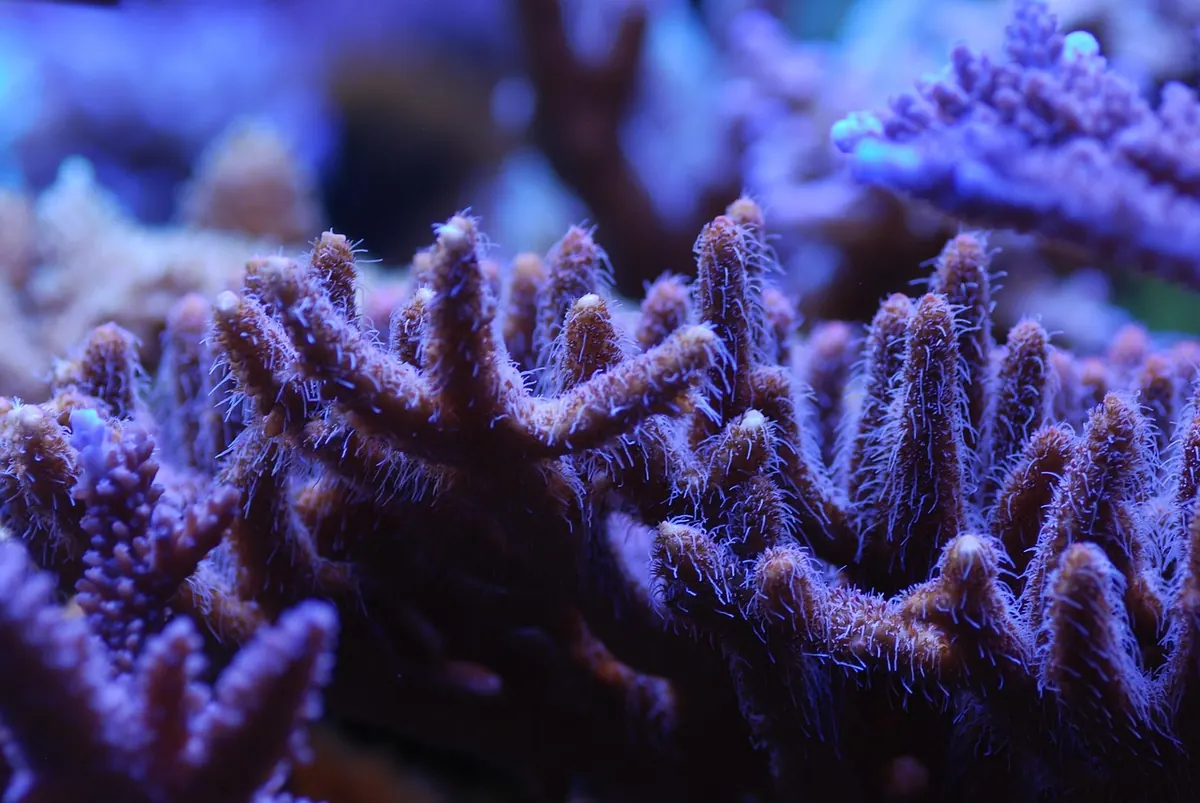
Photo: Pexels / Pixabay