Nano reef tanks are the most popular way into the saltwater side of the hobby, and it is easy to see why. A 60-litre all-in-one on a sideboard takes up less room than a television, costs a fraction of a full system, and still lets you keep corals that look like they belong on a wild reef. The catch is that small volumes forgive nothing. A dead snail in 300 litres is an inconvenience; in 60 litres it is an ammonia spike. Stock the tank sensibly and a nano will run beautifully for years. Stock it badly and you will spend more time fighting algae than watching fish.
What Counts as a Nano
For our purposes, a nano reef is roughly 40 to 120 litres. Below 40 litres you are in pico territory, where top-off and temperature control need near-daily attention. Above 120 litres the rules loosen considerably, simply because there is more water to dilute mistakes.
Small tanks behave differently for one main reason: the ratio of water to rock, sand and livestock. Every feeding, every death and every drop of top-off has a proportionally bigger effect. Stability, not equipment, is the real challenge. Plenty of live rock, a heater you trust and a reliable supply of reverse-osmosis water will do more for you than any gadget.
Corals That Suit Small Tanks
Corals are where a nano shines, because many of the most colourful species grow slowly and stay compact. As a general order of difficulty, start with soft corals, move to large-polyp stony corals, and only attempt small-polyp stony corals once your parameters have been steady for months.
Soft corals: the sensible starting point
Zoanthids, Ricordea mushrooms, toadstool leathers, Kenya trees and pulsing Xenia all tolerate the swings that come with a new tank. The warning is spread. Green star polyps, Xenia and many mushrooms will crawl across rock and smother slower neighbours. Mount them on an isolated rock island surrounded by sand so they can be trimmed or lifted out.
Large-polyp stony corals
Hammer, frogspawn and torch corals (Euphyllia), Duncanopsammia, Micromussa (often sold as Acans), Blastomussa, favia and Trachyphyllia are all realistic in a nano. Give each colony several centimetres of clear space: Euphyllia and faviids extend sweeper tentacles at night and will burn whatever they reach. Place plate-like Trachyphyllia on the sand rather than on rock.
Small-polyp stony corals and clams
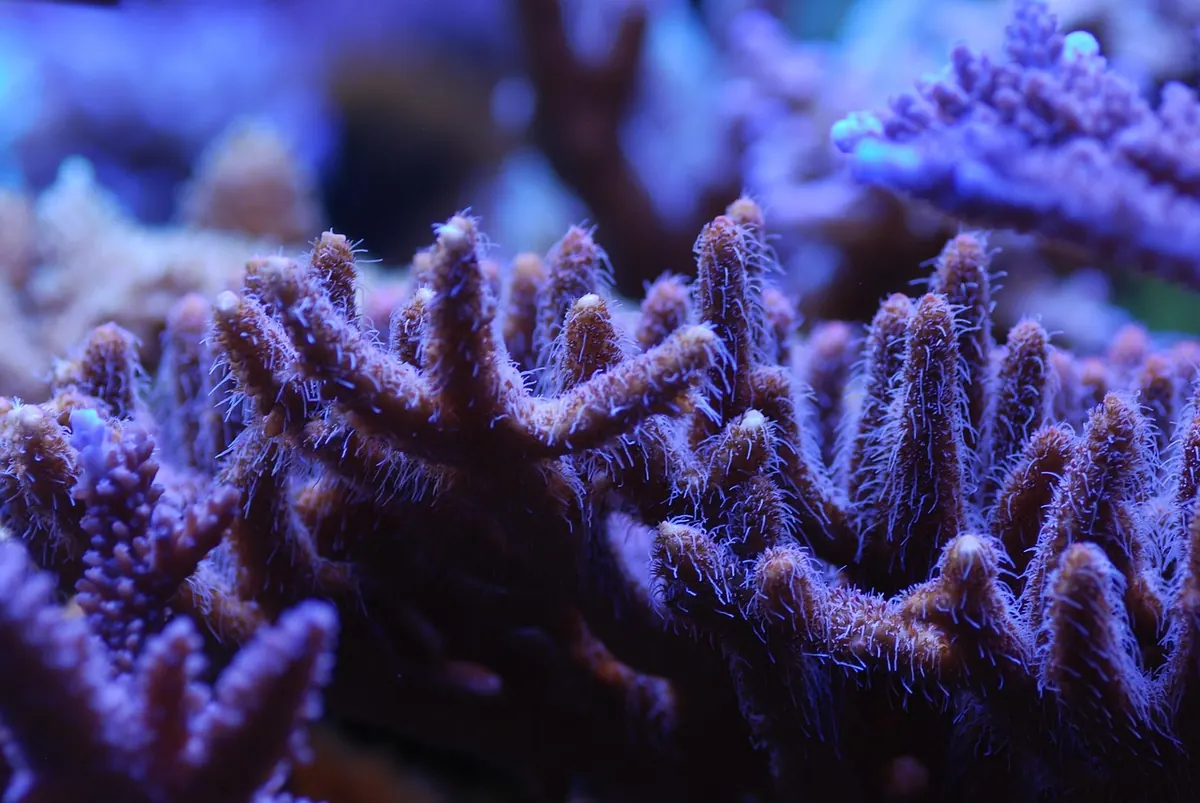
Montipora, Stylophora and Seriatopora frags are forgiving once alkalinity and calcium are stable. Small Acropora frags can follow. Clams need intense light plus steady calcium and alkalinity, so they suit the larger end of the nano range and a keeper who tests regularly.
Fish: Choose by Adult Size, Not by Colour
This is where most nano keepers get into trouble. A 60-litre tank comfortably houses two or three small fish; a 100-litre tank perhaps four or five, provided they occupy different levels and do not compete for the same food. Judge every purchase by adult size and swimming behaviour. Fish that hover close to rock do well. Fish that cruise open water do not.
- Clownfish: ocellaris or percula, one or a pair in 60 litres and up. Maroon and tomato clowns grow large and aggressive.
- Gobies: yellow clown, green clown, watchman, neon and court jester gobies are all well suited.
- Blennies: tailspot and bicolour blennies are peaceful and graze algae. Midas blennies may nip.
- Firefish: peaceful, jump-prone, so keep the tank covered.
- Royal gramma: colourful and hardy, but wants a cave to retreat into.
- Small wrasses: possum and pink-streaked wrasses are gentle. Six-line wrasses are useful but often bully later additions, so add them last.
Leave these on the shop shelf: any tang, butterflyfish, anthias, grouper, lionfish, trigger, moray eel, or mandarin dragonet. Mandarins are not aggressive — they simply starve in a small tank without a large, established population of copepods. Dwarf angelfish sit in a grey area: beautiful, but they need a good 100 litres plus and may nip coral flesh.
Inverts That Earn Their Place
A clean-up crew does the quiet work of keeping a nano presentable. Cleaner and blood shrimp are bold and long-lived. Sexy shrimp stay tiny and often host in a toadstool. Peppermint shrimp sometimes eat aiptasia and sometimes eat coral flesh, so treat them as a gamble. For snails, Trochus, Cerith, Nassarius and Astrea cover rock, sand and glass between them. Add a few at a time and stop when algae is under control — a large crew with nothing to eat will starve.
Avoid Linckia starfish, sea apples, filter-feeding cucumbers, basket stars and large urchins that bulldoze frags. None of these do well in a small tank, and several can release toxins if stressed.
Stocking Mistakes That Cause Most Problems
- Buying juveniles without checking adult size. A two-centimetre fish in the shop may grow to 15 centimetres.
- Adding several fish at once. The bacterial filter needs weeks to catch up with each addition. Two to four weeks between fish is a sensible rhythm.
- Skipping quarantine. A small tank has no room for a disease outbreak. A simple quarantine container saves far more than it costs.
- Underestimating coral growth. That toadstool frag will double and shade half the rock beneath it.
- Starting with non-photosynthetic corals. Sun corals and most gorgonians need near-continuous feeding, which fouls a small volume quickly.
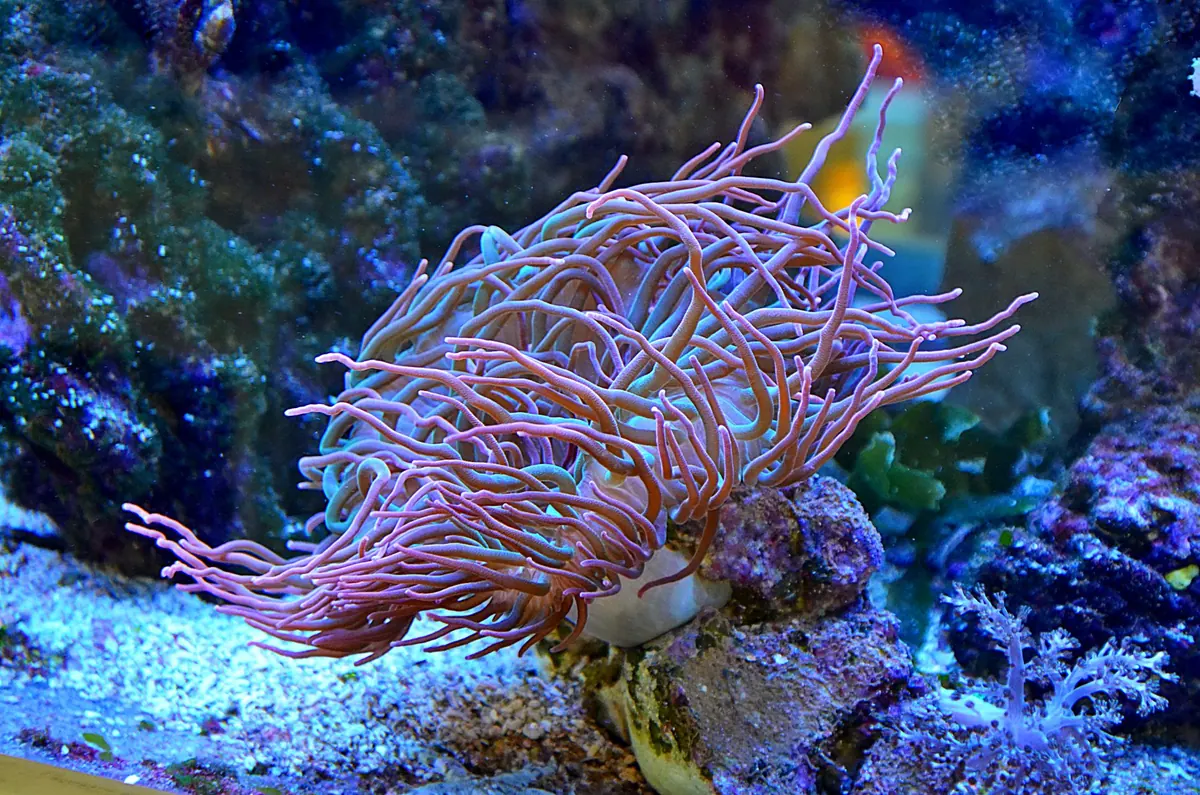
- Adding an anemone. Bubble-tip anemones wander, sting everything in their path and can find a powerhead. A nano is simply too tight a space.
- Overfeeding. Feed small amounts, remove what is not eaten, and rinse frozen food before it goes in.
- Ignoring salinity drift. Top off with RO water daily — never with salt water, and never with tap water.
Making a Nano Work Long Term
Weekly water changes of 10 to 20 per cent, daily top-off, and regular tests for salinity and alkalinity will keep most nano tanks stable with very little fuss. Keep a written record of what you add and when; it makes problems far easier to trace.
Plan the tank you want in two years, not the one you want this weekend.
Before you buy anything, write a stocking list and stick to it. Decide in advance what you will do when a fish outgrows the tank, and buy from a shop that will take livestock back. Add one animal at a time, dip every coral, and leave the tank alone when it looks settled. A nano stocked patiently over a year will always look better than one filled in a month.
Photo: Jiří Mikoláš / Pexels